I. Einleitung
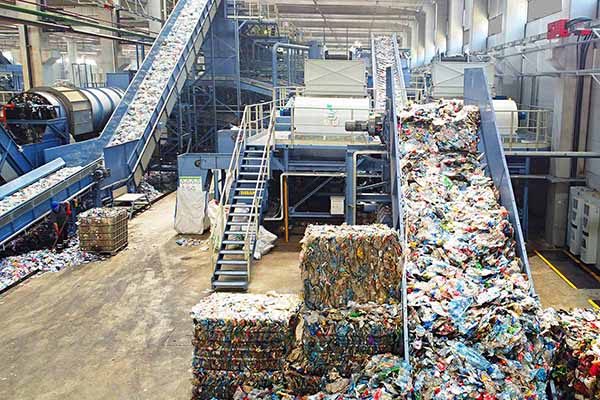
In the recycling field, industrial shredders provide the core driving force, transforming bulky waste into easy storage and transport fragments.
However, there are a wide types of shredders, including single-shaft, double-shaft, four-shaft, vertical, and hammer mill shredders, etc. Among them, the two most common options are single-shaft and double-shaft shredders. However, recyclers often ask: Which one should I choose? What is the core difference between them? What materials can they perfectly process? After reading our comprehensive guide, you will have a better understanding of single-axis and double-shaft shredders, and finally invest in a suitable one for your recycling business.
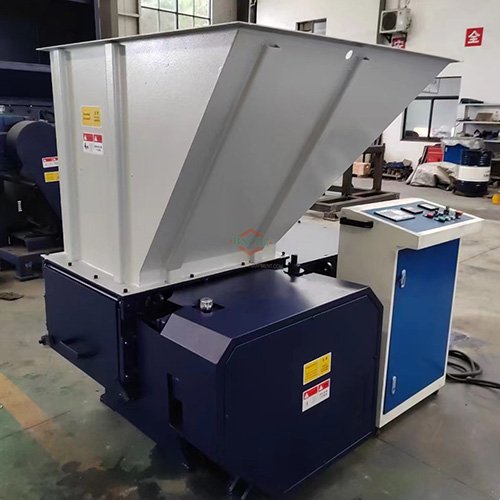
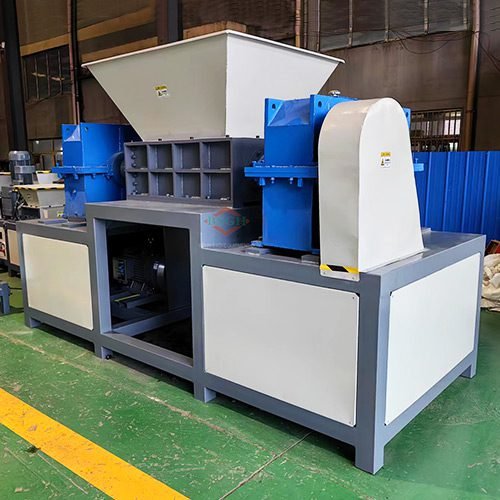
II. Single-Shaft VS Dual-Shaft Shredder
To maximize your recycling ROI and prevent machine jams, you must match the shredder’s internal mechanics to your scrap. Ultimately, the real difference between single-shaft shredder Und Zweiwellenzerkleinerer mainly lies in blades, shaft, feeding pusher, sieve, processing materials, structure and advantages. Let’s break down exactly how they differ so you can choose the best for your scrapyard:
1. Shaft Difference
Single-shaft shredder only has one main shaft, driven by its high-speed rotation, blades can achieve a rapid, continuous cutting action. However, the two-shaft shredder is equipped with two heavy-duty, counter-rotating main shafts. Instead of relying on speed, these twin shafts operate at low speed but offer high-torque shearing power when they rotate inward, gradually gripping and tearing apart the toughest, most stubborn scrap materials.

2. Blade Difference
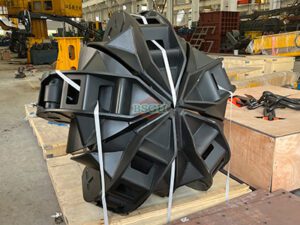
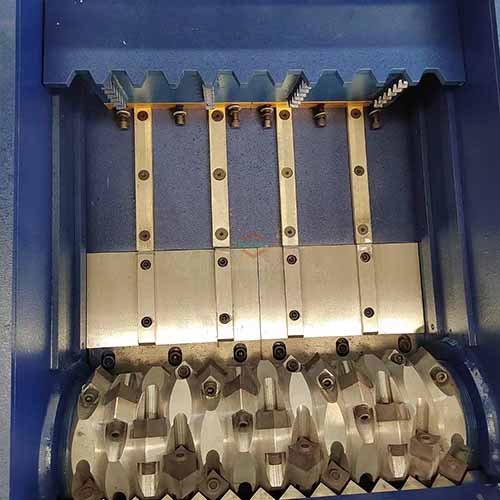
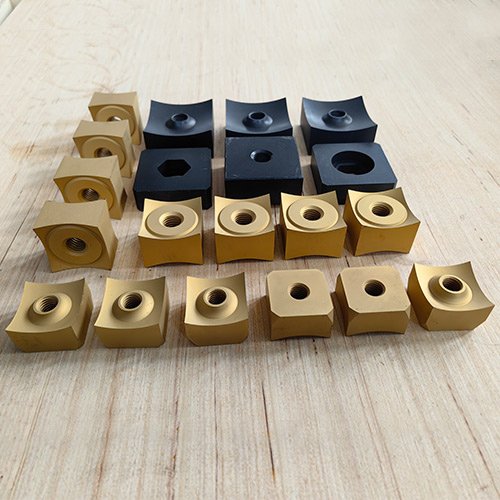
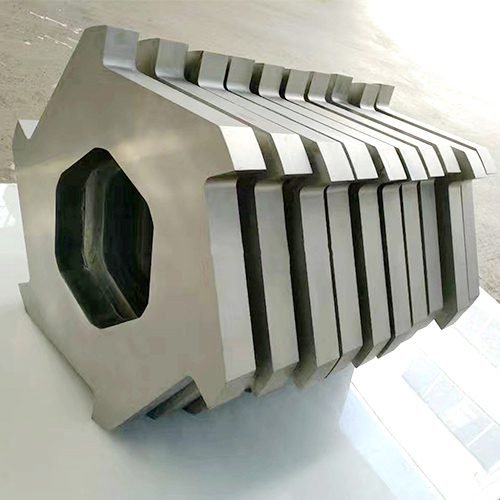
Single-shaft shredder’s moving blades are in square shape with four sharp cutting edges. When one edge becomes dull from high-speed precision cutting, operators can simply unscrew the blade and rotate it 90 degrees to a fresh edge, maximizing blade lifespan and reduce maintenance costs, but double-shaft shredder blades are in hexagonal shape, perfectly matching the hexagonal driving shaft. This interlocking geometric design guarantees zero slipping and 100% power transmission, providing shearing force without blades cracking under extreme pressure.
3. Feeding System Difference
Blades on single-shaft shredder possess relatively weak gripping ability, so its hydraulic pusher is essential to force waste toward the rotating main shaft, thereby preventing materials from bouncing or slipping within the hopper. On the contrary, the dual-shaft shredder requires no pusher; its blades are able to powerfully “self-grab ” materials, once the material falls under gravity, it is directly “bitten” into by the blades and pulled downward.
4. Screen Difference
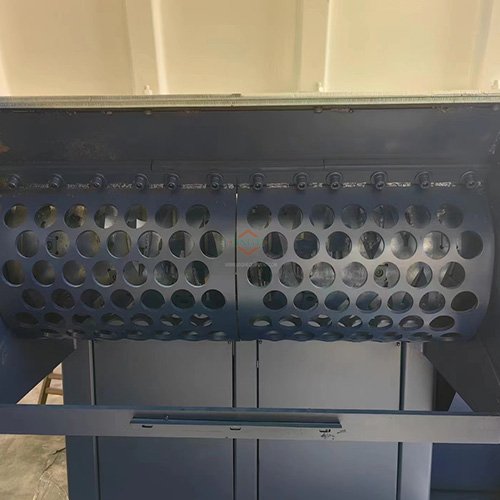
Single-shaft shredding machine utilizes a customizable bottom sizing screen to ensure all crushed particles meet a strict, uniform size requirement. And dual-shaft shredder has no bottom screen, shredded materials drop straight down on the floow, completely preventing blockages when processing complex or sticky waste.

5. Target Materials Difference
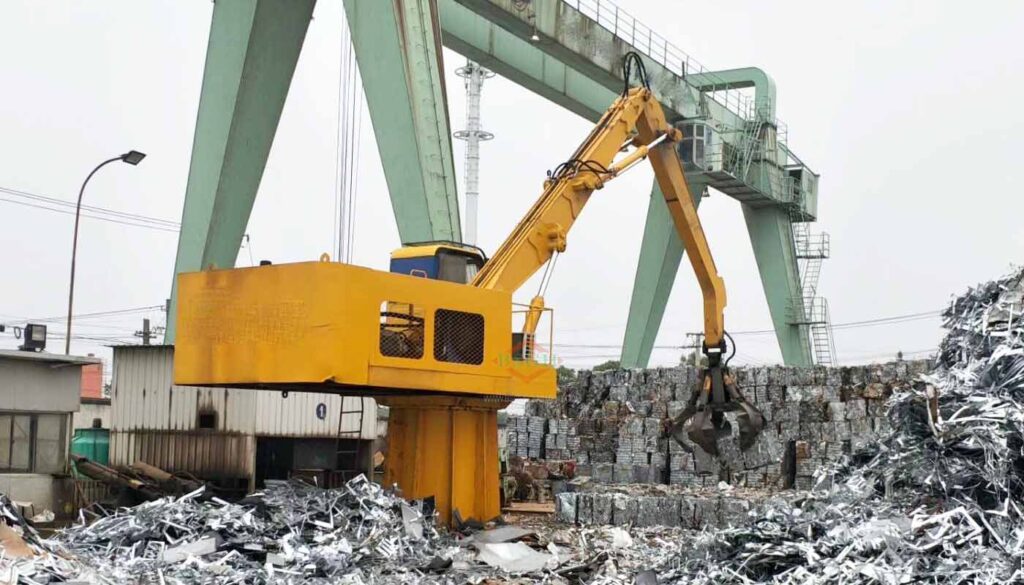
Single-shaft shredder is best suited for small to medium-density materials where size control is the primary goal, such as plastics, wood pallets, paper/cardboard, and light copper cables. Double-shaft shredder is built to handle bulky, extremely hard, and complex metal waste including heavy scrap metals & ELVs, electric motors, entangled cable wires, waste tires & rubber, bulky mixed & industrial waste etc., following video for your reference.
6. Advantage Difference
Although both shredders are important to the recycling industry, the advantage differences are obvious. Single-shaft shredder is known for continuous, high-speed processing efficiency and absolute size control. Thanks to its intelligent hydraulic pusher, bulky or hollow materials are constantly forced against the high-speed rotor without bouncing or machine idling, while a customizable bottom sizing screen guarantees the final shredded products meet strict, uniform dimensions ready for direct sale or secondary granulation. Conversely, the heavy-duty double-shaft shredder is famous for massive, unstoppable high-torque power. Operating at low speed with no screen, it can effortlessly crush the most stubborn, highly contaminated, and complex waste without jamming, stalling, or clogging. Besides, because of the slow tearing action rather than high-speed impact, dual-shaft shredder greatly reduces workplace noise pollution and airborne dust, creating a significantly safer and cleaner operational facility.
7: Structure Difference
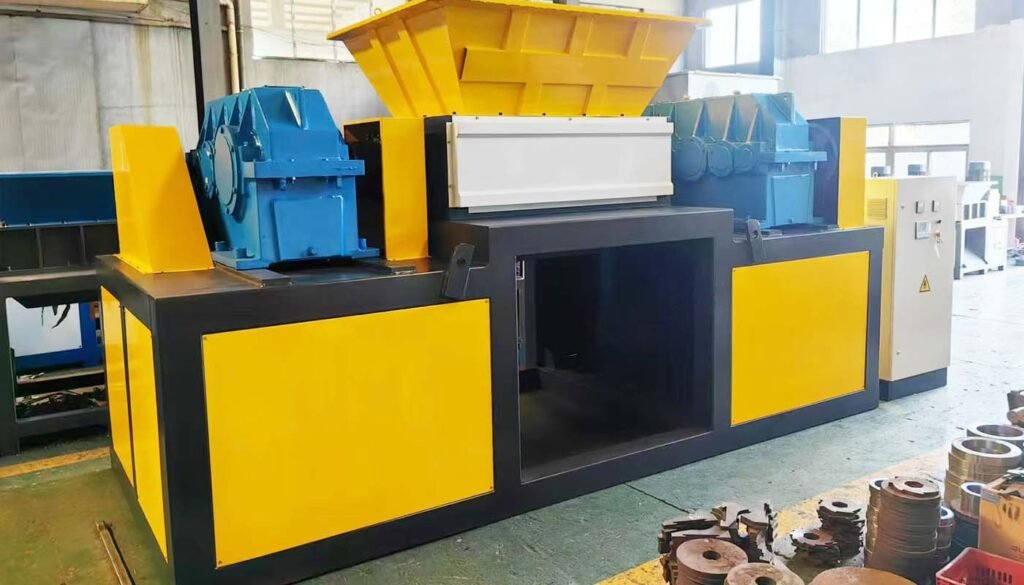
The most visible structural difference between these two machines lies in their drive systems. A standard single-shaft shredder is equipped with a single motor that drives one main rotor. In contrast, a double-shaft shredder utilizes a dual-motor setup, featuring two independent motors to power the twin cutting shafts.
8. Conclusion
| Modell | Single-Shaft Shredder | Double-Shaft Shredder |
| Cutting Mechanism | One rotor + Hydraulic pusher + Screen | Two counter-rotating interlocking shafts |
| Operating Speed & Torque | Medium-High Speed (80–120 RPM), High Torque | Low Speed (15–40 RPM), Massive Torque |
| Feeding System | Active feeding via hydraulic pusher | Gravity-fed, blades grab material |
| Sizing Screen | Yes. Customizable screen for precise size control | No need. |
| Final Output Size | Uniform and predictable | Irregular, coarse strips or chunks |
| Noise & Dust | Slightly higher | Very low noise and minimal dust |
| Best For | Plastics block, wood, medium cables, lightweight metals | Tires, car shells, metal scraps, cable bundles |
III. How to Choose
Selecting the right industrial shredder ultimately comes down to two critical factors: target material and desired output size. Here is a decision-making guide for your reference:
1. Choose a Double-Shaft Shredder:
- You are processing heavy, bulky, or hard metals: From solid steel drums or hard plastic drum and aluminum profiles to whole car tires, the high-torque but low-speed feature will effortlessly shear through tough materials without downtime.
- Your waste has a complex, mixed composition: scrap car shell, big objects and scrap mixed metals.
- Your primary goal is rough “pre-shredding”: If you simply need fast to reduce the size of large items before feeding them into a secondary crusher oderKupfergranulator, it’s your optimal choice.
2. Choose a Single-Shaft Shredder:
- You require strict, uniform output sizes: If you want exact particle sizes, single-shaft’s customizable bottom screen can meet your precise needs.
- If you mainly process scrap plastics block or such kinds plastic material, wood, or copper cables, you can choose single shaft shredder machine.
IV. Conclusion
Choosing between a single-shaft and double-shaft shredder is a critical investment for your recycling facility’s profitability. Both serve distinct, essential purposes:
Double-Shaft Shredders: Deliver maximum torque to easily tear through complex, bulky, and heavy scrap metals.
Single-Shaft Shredders: Provide precision and high-speed processing to turn plastics, wood, and cables into uniform, market-ready materials.
Still unsure which shredder perfectly matches your requirements? We are here to help. At BSGH-Granulator, our engineering team offers Custom ROI Analysis and Machine Configuration Consulting. Welcome your inquiry!
Links:




 German
  English
  Spanish
  Portuguese
  French