I. Introdução
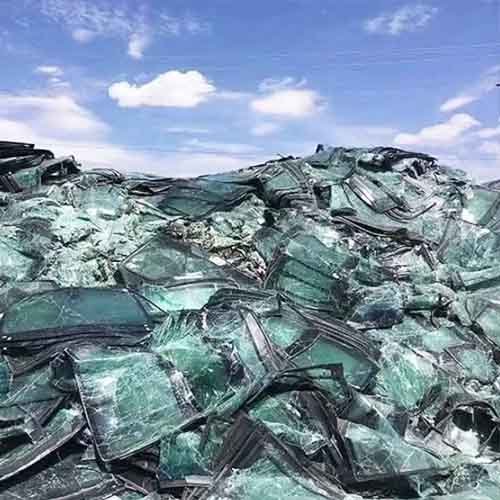
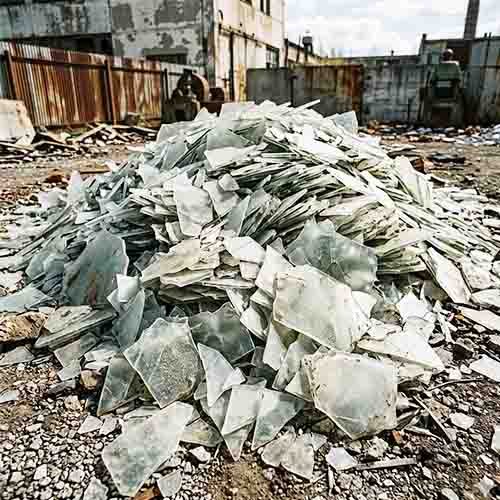
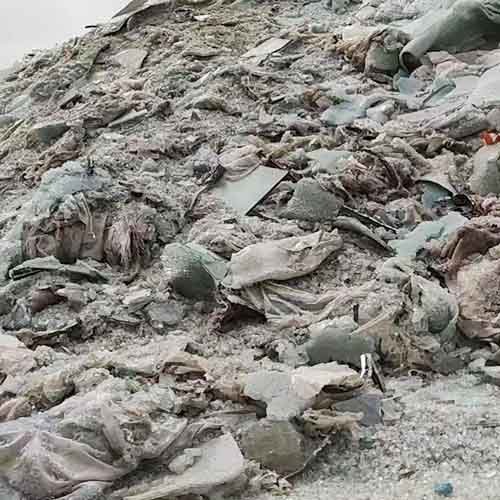
As the global volume of end-of-life vehicles (ELVs) continues to rise, most recycling yards focus entirely on recycling car shells or metals inside, but ignore a hidden value – windshields, often considered as non-recyclable and valueless.
Can windshield glass actually be recycled? Yes. It simply requires specialized equipment to effectively separate glass from internal PVB plastic layer.
Read on to discover:
- Core Challenge: Why laminated auto glass is difficult to process.
- Mechanical Solution: How specialized equipment actively separates PVB from glass.
- Commercial Value: Where the final products go to.
II. Why is Windshield Glass Hard to Recycle?
Compared to ordinary automobile glass, windshields are made up of more complex composite, making it greatly hard to process.
1. “Sandwich” Structure
Windshield adopts a specialized laminated structure: two layers of high-strength glass securely bonded together by a robust PVB (Polyvinyl Butyral) interlayer film. In daily driving, PVB film provides essential UV protection and sound insulation. More importantly, during a collision, it absorbs massive impact energy, holding cracking glass firmly in place to protect passengers. Therefore, this life-saving PVB layer is the key factor to distinguish windshields from other car glasses:
| Material Feature | Windshield (Laminated Glass) | Side/Rear Windows (Tempered Glass) |
| Material Structure | Glass + PVB Film + Glass | Single-layer tempered glass |
| State After Crushing | Glass chips adhere to plastic film | Clean, uniform glass particles |
| Recycling Difficulty | High (Specialized separation) | Low (Standard crushing) |
2. Why Traditional Methods Fail: Purity Challenge
The features that make windshields safe are exactly what make them a processing nightmare for standard recycling equipment. PVB film and glass are bonded very tightly. Furthermore, both have opposite physical properties: glass is highly brittle, while internal PVB film is soft, elastic, and extremely adhesive.
Traditional shredder simply crushes glass and tears film without breaking adhesive bond, causing a serious cross-contamination issue, sharp glass pieces stick stubbornly to the separated PVB pieces. Glass and PVB mixture completely lowers their commercial value and unfit for downstream reuse.
III. Step-by-Step Windshield Recycling Process in BSGH Granulator
Unlike traditional methods that often destroy end products resale value, BSGH Granulator has engineered a highly specialized windshield recycling system, effortlessly crush and separate auto windshields glass, realizing a perfectly clean removal from internal PVB film.
Before processing automobile windshield glass, facility owners face a profit-driven decision: want to get PVB flakes or intact PVB film? Because whole PVB sheets have a significantly higher market, based on this point, our advanced roller press helps you to achieve it. During the pre-processing stage, the windshield recycling system efficiently removes pure glass while keeping the entire PVB sheet perfectly intact, getting maximum ROI for your yard.
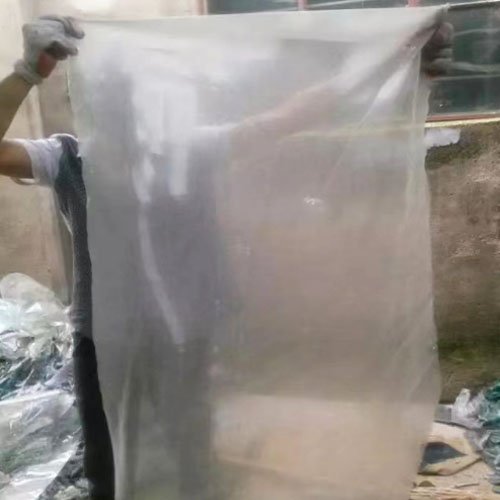
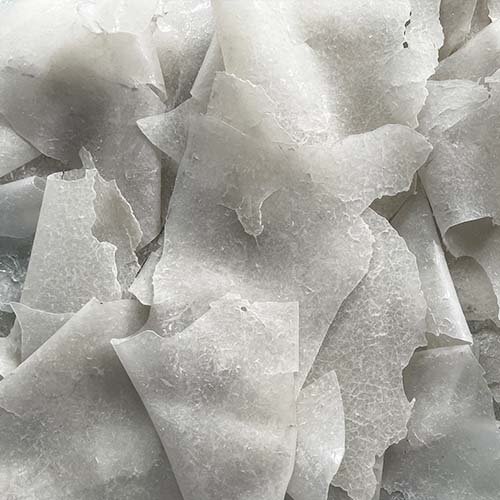
Let’s break down exactly how to get whole PVB film step-by-step:
Step 1: Pre-pressing for Intact PVB Film Recovery
To successfully obtain a complete PVB sheet, the strong adhesive bond between glass and plastic must be weakened. We make it come true through a 4-step process:
- Water-Lubricated Roller Pressing: Your scrap needs to be placed flat and fed into a specialized roller press, keeping a continuous water spray between the rollers. Glass layers will be mechanically pressed without tearing the inner film.
- Moisture Locking: Wet glass sheets are stacked together and covered with a heavy-duty tarpaulin. This critical step locks in moisture, keeping it wet all the time.
- Curing Phase: The stacked glass needs to be placed for 2 to 3 days. During this time, trapped moisture can actively break down the adhesive layer. When transparent PVB film visibly turns into milky-white color, it finishes curing.
- Final Separation: Once the adhesive bond is weakened, you can convey the windshields’ sheets to the vibrating platform for the next step crushing and separating.
Step 2: Automated Vibrating Feeding
Laminated windshields are placed onto a heavy-duty vibrating platform, ensuring a steady, automatic feed, smoothly conveying scrap directly into the main crusher and separator’s chamber.
Step 3: High-Speed Centrifugal Separation
Once windshields get into the chamber, a high-speed rotating drum generates immense centrifugal force to shred materials into cullet and PVB interlayer, completely separating glass from plastic film. (Smart Batch Processing: The system operates on a highly efficient 1-minute cycle. Using a convenient remote control, the operator simply opens the chamber door to discharge the separated glass and PVB through two outlets, then closes it for further discharging.)
Step 4: Final Purity Sorting
To guarantee pure PVB film, recovered plastic layer passes over a small vibrating table. It effectively shakes loose and sorts out any microscopic glass particles inside, then you can get intact PVB film and pure cullet.
Observação: For bulk windshield materials, if you do not require PVB layer in whole, then you can skip pre-press step and feed scrap directly onto feeding conveyor for crushing and separation, details are listed as follows:
- Feed scrap windshield into conveyor belt;
- Crusher and separator machine process materials into cullet and film layer, discharging from respective outlets;
- Vibrating table separates glass chips from film layer again, making PVB 100% pure, then you can get small PVB flakes.
IV. Commercial Value of Recycled Materials
The true profitability of a professional windshield recycling system is determined by its final products purity. By generating highly uncontaminated materials, our equipment allows you to sell directly at top price, effectively transforming zero-value scrap into higher returns.
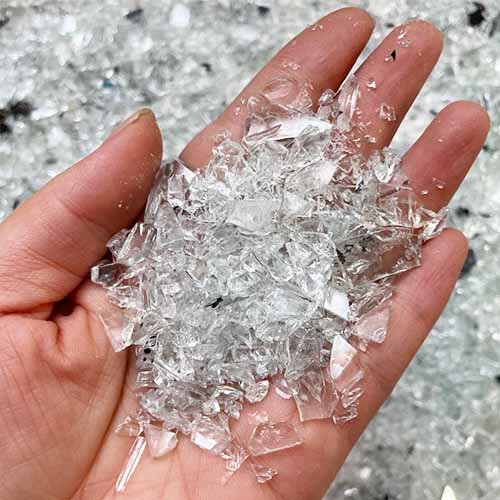
1. High-Purity Glass Cullet
Our advanced mechanical crushing and separation line outputs ultra-pure glass cullet ready for industrial buyers. It is in high demand for:
- Fiberglass manufacturing
- Building and construction aggregates
- Foam glass production
- Industrial filler materials
2. Intact PVB Film
The internal PVB plastic layer is widely used in diverse industries, holding great resale value when properly recovered. By utilizing our specialized roller press equipment, you can get intact PVB film, perfectly suited for high-value reprocessing, including:
- Advanced chemical recycling processes
- Recycled plastic manufacturing
- Carpet backing and acoustic insulation
- Architectural sandwich panels
V. Conclusion
Ultimately, windshield recycling is no longer a challenge. By integrating BSGH Granulator’s specialized recycling equipment into your facility, you can effortlessly solve traditional processing bottlenecks. Our advanced systems guarantee flawless recovery of both ultra-pure glass cullet and high-value PVB film, creating a powerful “dual revenue” for your yard. Clean glass generates a stable revenue stream, while intact, resin film provides a secondary profit resource. By adopting our solution, you can perfectly combine green sustainability with maximum return on investment.
Ready to unlock the hidden value in scrapped cars? Contact our engineering team today to customize the perfect heavy-duty windshield recycling solution for your business.
Links:
- Recycle An Entire Scrap Car
- Scrap Car Recycling Machine
- Máquina trituradora de carros com moinho de martelos
- Destruidor de carros para venda
- Car Loom Wire Granulator Machine


 Portuguese
  English
  Spanish
  German
  French